
Clean drinking water is something most of us use every day without giving it much thought. We drink it at home, carry it to work, buy it from roadside shops and give it to our children. Some people drink sachet water because it is affordable. Others prefer bottled water because it is convenient. Many families use whichever drinking water they can easily find.
But here is a question worth asking: How do you know the water you are drinking is actually safe?
Is it because it looks clear? Because it tastes good? Because everybody in your neighbourhood drinks it? Or because the person selling it has been in business for many years?
These things may make us feel comfortable, but they do not prove that drinking water is safe.
For residents of Benin City, Edo State, choosing drinking water is an everyday decision. Whether you live in Ugbowo, Ekosodin, Aduwawa, Ikpoba Hill, Sapele Road, Ring Road, New Benin or another part of the city, the water you drink deserves your attention.
This is not about frightening people or making anyone feel guilty about their choices. It is about understanding something that affects every household: the quality of the water we drink.
In this guide, we will explain what makes drinking water safe, what to look for when buying sachet or bottled water, what water testing actually tells us, and how to protect the water we bring into our homes and workplaces.
We will also explain what packaged water registration means and why choosing a water supplier should involve more than looking at the price.
By the end, you should have a clearer understanding of how to make informed drinking-water choices for yourself and your family.
1. What Does Safe Drinking Water Really Mean?
Safe drinking water is water that does not pose an unacceptable risk to your health when consumed as intended.
That sounds simple, but there is more to it than many people realise.
Water can look clean and still contain harmful microorganisms or unwanted chemicals. It can have no unusual smell and still be unsuitable for drinking. It can even taste pleasant while having a problem that cannot be detected by the human senses.
Imagine filling two transparent glasses with water. Both look equally clean. Both are colourless. Neither has a strange smell.
Would you be able to tell which one is safe simply by looking at them?
Not necessarily.
Some harmful substances and microorganisms cannot be seen, smelled or tasted. This is why drinking-water safety depends on proper treatment, hygienic handling and appropriate testing, rather than appearance alone.
The World Health Organization (WHO) explains that contaminated drinking water can transmit diseases such as cholera, diarrhoea, dysentery and typhoid. It identifies faecal contamination as a particularly important threat to drinking-water safety.
This does not mean that every glass of water in Benin City is dangerous. It means that consumers and water producers should take water quality seriously.
A safe supply should meet appropriate microbiological and chemical requirements. It should also be protected from contamination during treatment, packaging, transportation, storage and use.
In simple terms, safe drinking water is not just water that looks good. It is water whose safety is supported by proper processes and reliable evidence.
2. Why Drinking-Water Safety Matters to Every Household in Benin City
Water is part of almost everything we do.
We drink it when we wake up. We use it to prepare meals, take medication and make drinks. Children take it to school, workers carry it to their offices, and families use it throughout the day.
Because we use water so frequently, its quality deserves the same attention we give to the food we eat.
Think about how carefully you choose food for your children. You may check whether vegetables are fresh, whether food is properly cooked and whether a meal has been stored safely.
Drinking water deserves similar attention.
For a household in Benin City, the choice may appear simple: buy a sachet, purchase a bottle or use water stored at home. However, each option has its own considerations.
A sachet may be affordable and easy to carry. A bottled product may be convenient for an office meeting or a journey. Water stored at home may be useful for cooking and everyday consumption.
Regardless of the option, the same basic question remains: has the water been produced, handled and stored in a way that protects its quality?
Water-related illness can affect a person’s ability to work, attend school and carry out everyday activities. When someone becomes ill, the household may also face medical expenses, missed working days and additional responsibilities.
Preventing avoidable exposure to contaminated drinking water is therefore an important part of protecting household well-being.
This is especially relevant to families with young children and older people, who may be more vulnerable to the consequences of certain infections.
The point is not to spend more money than your household can afford. It is to make the most informed choice possible within your budget.
3. Is Clear Water Always Safe to Drink?
One of the most common mistakes people make is assuming that clear water is safe water.
It is an understandable assumption. When we see clean, colourless water, we naturally feel more comfortable drinking it.
However, clarity tells us only a limited part of the story.
Water may contain harmful bacteria or viruses without showing any visible signs of contamination. Certain dissolved chemicals and metals are also invisible to the naked eye.
Consider two examples.
The first is water that contains visible dirt. Most people would immediately recognise that it should not be consumed without appropriate treatment.
The second is water that looks perfectly clear but contains harmful microorganisms. It may appear safe, even though laboratory testing could reveal a problem.
The second situation is why appearance alone is an unreliable safety test.
This is also why consumers should be cautious about judging drinking water solely by its colour, taste or smell.
If packaged water looks unusual, has an unpleasant odour, contains visible particles or has damaged packaging, avoid drinking it and report the concern to the supplier or appropriate authority.
However, the absence of these warning signs does not establish that the water is safe.
Clear water may be a good sign, but it is not proof of safety.
4. What Can Make Drinking Water Unsafe?
There is no single reason why drinking water may become unsafe. Problems can occur at the source, during treatment, during packaging or even after the water reaches your home.
Understanding these possible problems helps consumers know what to look for.
A. Harmful microorganisms
Some microorganisms can make people sick when they enter drinking water. These include certain bacteria, viruses and parasites.
One important example is E. coli. Some types of this bacterium can cause illness, and its presence in drinking water can indicate contamination from faecal sources.
Contamination can occur when human or animal waste reaches a water source or when water comes into contact with contaminated surfaces.
This is why proper disinfection and hygienic handling are essential.
B. Unwanted chemicals
Water can also contain chemicals that are undesirable or harmful at certain concentrations.
Depending on the source, these may include lead, arsenic, nitrate and other substances. Some occur naturally in the environment, while others may enter water through human activities.
The important thing to understand is that not every chemical in water is harmful. Some minerals are naturally present and contribute to the water’s taste.
What matters is the type of substance, its concentration and the applicable drinking-water requirements.
C. Poor treatment
Water collected from a borehole, well or another source may require treatment before it is suitable for drinking.
The appropriate treatment depends on what is actually present in the raw water.
For example, water with excessive suspended particles may require filtration. Water with a microbiological problem requires an effective disinfection process. Water containing certain dissolved substances may require a different treatment method.
Using a treatment machine does not automatically guarantee safe water. The treatment must be appropriate for the source, properly operated and monitored.
D. Poor hygiene during packaging
Even when water has been treated properly, it can become contaminated if it comes into contact with unclean equipment, containers, pipes or handling surfaces.
This is why cleanliness in a water factory is more than sweeping the floor or washing the building.
It includes maintaining hygienic production equipment, protecting treated water, cleaning filling systems and ensuring that workers follow appropriate hygiene practices.
E. Improper storage
The responsibility for protecting drinking water does not always end when it leaves the factory.
Heat, sunlight, damaged packaging, dirty storage areas and poor handling can affect packaged water.
Water stored in an open or poorly cleaned container may also become contaminated after treatment.
Water safety is a process that requires attention from the source all the way to the point of consumption.
5. How Can You Choose Safe Sachet Water in Benin City?
Sachet water is a familiar part of everyday life in Benin City. People buy it from supermarkets, neighbourhood shops, roadside vendors and other retail outlets.
Its affordability and portability make it a practical option for many households.
But how should you choose it?
Here are some useful things to check.
Check the registration details
Look at the information printed on the sachet packaging. Check whether it identifies the product and its manufacturer and displays the relevant registration details.
For products that require NAFDAC registration, check the registration number and, where possible, verify it through NAFDAC’s official channels.
Do not assume that a number printed on a package is genuine simply because it looks official.
Registration is an important part of regulatory oversight, but it should not be treated as a substitute for ongoing quality control.
Examine the packaging
Before purchasing sachet water, check whether the plastic is intact.
Avoid sachets that are leaking, torn, punctured or visibly damaged. Pay attention to the seal and the condition of the package.
A damaged sachet may expose the contents to contamination or indicate poor handling.
Also avoid buying sachets with unusual discolouration, visible particles or other unexpected changes.
Look at where the water is stored
You may not be able to inspect the factory where the water was produced, but you can pay attention to how it is stored at the point of sale.
Is it exposed to strong sunlight for long periods? Is it stored near waste, chemicals or other sources of contamination? Is the storage area reasonably clean?
Choose products that are stored in a clean, shaded place whenever possible.
Check the date and product information
Where dates and batch details are provided, examine them. Avoid products that are past their stated shelf life or have damaged labels that make important information unreadable.
If the product looks suspicious or has an unusual smell after opening, do not drink it.
Do not rely on price alone
A low price does not automatically mean a product is unsafe. Equally, a higher price does not automatically mean it is safer.
Instead of judging a product solely by what it costs, consider its registration information, packaging condition, storage and the manufacturer’s quality practices.
These checks cannot replace laboratory testing, but they can help you avoid obvious warning signs.
6. How Can You Choose Safe Bottled Water?

Bottled water is popular in offices, homes, restaurants, hotels, meetings and social events. It is also convenient when travelling because the bottle can be carried easily.
However, bottled water is not automatically safe simply because it comes in a plastic bottle.
The same basic principles that apply to sachet water also apply here.
First, inspect the seal. The cap and tamper-evident feature should be intact. Avoid bottles that appear to have been opened, resealed or damaged.
Second, examine the bottle. Avoid bottles with unusual discolouration, leaks, visible foreign material or other signs of damage.
Third, read the label. Look for the manufacturer’s details, registration information, batch information and relevant dates.
Fourth, pay attention to storage. Bottled water should be kept in appropriate conditions, away from unnecessary heat, direct sunlight and harmful substances.
Finally, buy from a reliable source. Choose sellers who store packaged water responsibly and can provide information about their products.
A bottle’s appearance, brand popularity or selling price cannot independently prove its microbiological safety.
For businesses that buy bottled water in large quantities, it is also useful to consider how the products are stored before distribution and how they will be kept at the destination.
7. What Does NAFDAC Registration Mean for Drinking Water?
Many Nigerians look for a NAFDAC registration number when buying packaged drinking water. This is a useful part of checking a product’s identity and regulatory status.
However, it is important to understand what registration does and does not mean.
NAFDAC, the National Agency for Food and Drug Administration and Control, regulates relevant food and other regulated products in Nigeria, including packaged drinking water.
Registration is part of the regulatory process for products within its scope. It helps identify products and manufacturers and supports regulatory oversight.
However, registration should not be misunderstood as a guarantee that every package produced, transported or sold will always be free from problems.
For example, contamination can occur after production if packaging is damaged or water is stored or handled poorly. A product can also experience quality-control problems that require investigation.
Consumers should therefore consider registration alongside the condition of the product and the way it is handled.
When purchasing packaged water:
- Look for the applicable registration information.
- Check that the product and manufacturer details are consistent.
- Avoid products with suspicious or altered labels.
- Report suspected counterfeit or misleading registration information to the appropriate authority.
- Remember that registration does not remove the need for proper production and storage.
For manufacturers, regulatory compliance should be part of a continuing commitment to quality rather than a one-time administrative exercise.
For consumers, understanding registration helps replace assumptions with informed decisions.
8. Why Water Quality Testing Matters
Imagine drinking water that looks clean, tastes normal and has no unusual smell. Without laboratory testing, you may still have unanswered questions about its quality.
That is where water testing becomes important.
Water quality testing involves examining water to determine whether its properties meet relevant requirements for its intended use.
Different tests look for different things. No single measurement can answer every question about water safety.
Here are some of the important things that may be tested.
pH: Is the water acidic or alkaline?
pH measures how acidic or alkaline water is.
The scale generally runs from 0 to 14. A value below 7 is acidic, 7 is neutral and above 7 is alkaline.
pH matters because it can influence water’s taste, its interaction with plumbing and equipment, and the effectiveness of some treatment processes.
However, pH alone does not tell you whether water is safe to drink. A water sample can have a pH within an acceptable range and still contain harmful microorganisms or unwanted chemicals.
TDS: How much dissolved material is in the water?
TDS means total dissolved solids. It gives an indication of the amount of dissolved substances in water, including minerals and salts.
Some dissolved minerals occur naturally and are not necessarily harmful. They can also affect taste.
A high or low TDS reading alone cannot establish whether drinking water is safe. It is one measurement that must be considered alongside other relevant tests.
Turbidity: How cloudy is the water?
Turbidity measures how cloudy water is because of suspended particles.
These particles may include fine soil, organic matter and other material.
High turbidity can indicate a treatment problem. Suspended particles can also interfere with some disinfection processes.
However, water with very low turbidity is not necessarily free from harmful microorganisms. Microbiological testing remains important.
Total coliform: Is there a possible hygiene problem?
Total coliform testing looks for a group of bacteria commonly used as indicators of water hygiene.
Their presence in finished drinking water may indicate problems with treatment, handling or the integrity of the water system. Further investigation is necessary to establish the source and significance of the result.
E. coli: Is there evidence of possible faecal contamination?
E. coli testing is especially important because its presence in drinking water can indicate faecal contamination.
Drinking water should meet the applicable microbiological standard for E. coli. A positive result requires prompt investigation and appropriate corrective action.
Chemical testing: Are unwanted substances present?
Depending on the water source and its potential risks, testing may include nitrate, fluoride, iron, manganese, lead and other substances.
The correct testing programme should be based on the source of the water, the treatment process and applicable standards.
A responsible water-quality programme does not simply repeat one convenient test. It selects suitable tests and interprets the results together.
Remember: Good taste, clear appearance, a satisfactory pH reading or low TDS is not enough to prove that water is safe. Reliable assessment requires appropriate physical, chemical and microbiological testing.
9. What Do Studies in Benin City Tell Us About Drinking Water?
Water safety is not just a subject discussed in other countries. Researchers have also investigated packaged drinking water sold in Benin City.
A 2023 study published in the Journal of Applied Sciences and Environmental Management examined the physical and chemical characteristics of ten sachet water brands sold in Benin City. The researchers assessed properties such as pH, turbidity, total dissolved solids and selected metals. They reported variations between samples, including some pH and turbidity results outside the limits they used for comparison.
Another study, published in 2025 in the Nigerian Journal of Applied Sciences, examined production practices and selected quality characteristics of sachet and bottled water sold in Benin City. Its authors reported that some factories had experienced post-production contamination and identified differences in label compliance among the products examined.
These studies are useful because they demonstrate why water quality deserves continuous attention, even when a product is packaged and sold commercially.
However, there is something important to understand about research findings.
A study examines particular samples, locations, brands and periods. Its results should not automatically be applied to every water brand in Benin City today.
It would be misleading to use a study of selected products to claim that all sachet water in the city is unsafe. It would be equally misleading to assume that every bottled water product is safe without testing.
The practical lesson is straightforward: water quality should be established through appropriate testing and sound production practices, not assumptions about a particular type of packaging.
For consumers, these studies reinforce the importance of checking products and understanding water safety. For manufacturers, they highlight the importance of maintaining effective quality control throughout production.
10. Does Bottled Water Have to Be Safer Than Sachet Water?
Many consumers believe bottled water must be safer than sachet water. Others believe sachet water is just as good because it is widely consumed.
Neither belief should be accepted without evidence.
Both sachet and bottled drinking water can be produced safely when the source, treatment, packaging and handling meet the applicable requirements.
Likewise, either type can experience quality problems if the production or handling process is inadequate.
The main difference between the two is their packaging and the practical ways people use them.
Sachet water is often purchased for immediate consumption because it is portable and usually sold in smaller quantities. Bottled water is convenient for meetings, travel, restaurants, homes and events.
When comparing the two, consider:
What to consider
Sachet water
Bottled water
Packaging
Sealed flexible plastic sachet
Sealed plastic bottle
Portability
Convenient for short-term use
Convenient for travel and everyday use
Storage
Protect from heat, damage and contamination
Protect from heat, damage and contamination
Safety
Depends on treatment, hygiene and handling
Depends on treatment, hygiene and handling
Checking
Inspect seals, packaging and product details
Inspect cap, seal, bottle and label
Suitability
Useful for individual and everyday consumption
Useful for individual, household and group consumption
Neither format automatically guarantees better water quality. Consumers should make their decisions based on their needs and the available evidence about the product.
11. How Should You Store Drinking Water at Home?

Choosing properly packaged water is important, but storing it correctly is just as relevant.
Many households purchase drinking water in bulk to save time and reduce the number of trips to the shop. This can be practical, provided the water is stored properly.
Here are some simple precautions.
Keep drinking water away from direct sunlight. Store packaged water in a cool, shaded place, away from prolonged exposure to heat.
Keep it away from chemicals. Do not store drinking water beside petrol, pesticides, detergents or other substances that could contaminate it if spilled.
Use a clean storage area. Avoid keeping water beside refuse, dirty drainage areas or other possible sources of contamination.
Do not use damaged packages. If a sachet or bottle is leaking or has an obviously damaged seal, do not assume its contents are safe.
Observe the product’s stated shelf life. Follow the manufacturer’s storage instructions and do not consume products that have passed their stated expiry or best-before date.
Keep opened water protected. Once a bottle has been opened, avoid touching the mouth of the bottle with dirty hands or surfaces. Close it when not in use.
These precautions are especially useful in busy households, where water may be purchased several days before it is consumed.
What about water stored in a dispenser?
Water dispensers are common in offices, homes, hotels and other establishments.
However, a dispenser can become a source of contamination if it is not properly cleaned and maintained.
Follow the manufacturer’s cleaning instructions. Clean the relevant surfaces and components at the recommended intervals, and avoid touching the bottle opening or dispenser connection with dirty hands.
If the dispenser has an unusual smell, visible dirt or signs of damage, stop using it until the problem has been investigated and corrected.
The quality of the water and the cleanliness of the equipment dispensing it both matter.
12. What Should You Do If You Suspect Your Drinking Water Is Unsafe?
Sometimes you may notice that your drinking water has an unusual smell, colour or taste. You may also discover that its packaging has been damaged or that it was stored in poor conditions.
Do not ignore these warning signs.
If you suspect that a particular package is unsafe, stop drinking it. Keep the packaging and its product information, including the batch details, if available.
Contact the seller or manufacturer to report the problem. If you suspect a wider product safety issue, report it to the appropriate regulatory authority.
If the concern involves your household’s stored water, stop using the questionable supply for drinking and food preparation until its safety has been assessed.
Where a water source is known or suspected to be contaminated, use a verified safe alternative. Appropriate boiling or disinfection can help control many disease-causing microorganisms, but boiling does not remove every harmful chemical. Follow official public-health advice for the particular contamination risk.
If someone develops diarrhea, vomiting or other concerning symptoms after drinking questionable water, seek appropriate medical advice. Do not assume that the water was necessarily the cause without a proper assessment.
For households using private wells or boreholes, consider periodic testing and additional testing after flooding, repairs, unusual changes in water quality or other events that may increase contamination risk.
The important thing is not to panic. It is to take sensible action when there is a genuine reason for concern.
13. What Should You Look for in a Drinking-Water Company in Benin City?
Choosing a drinking-water supplier involves more than finding a product that is available at the nearest shop.
For households, offices, shops and event organisers in Benin City, a few practical considerations can help.
Proper registration and product information
Look for manufacturers who provide the applicable regulatory information and clear product details.
A company should be able to identify its products and provide the relevant information about its production and quality-control arrangements.
A clear approach to quality control
A responsible manufacturer should have an organised system for monitoring water quality.
This includes appropriate testing, hygienic production, monitoring treatment processes and addressing problems when they occur.
Consumers purchasing in large quantities can ask suppliers about the quality documentation available for their products.
Hygienic production and handling
The cleanliness of a production facility, equipment and packaging process matters.
Where possible, learn about a manufacturer’s production practices. Businesses purchasing water regularly may also request relevant quality documentation.
Reliable supply arrangements
For offices, schools, shops and event organisers, consistent supply can be important.
Before placing a large order, clarify product sizes, quantities, prices, delivery arrangements and the expected delivery schedule.
Do not assume that every supplier offers the same services. Confirm the actual terms before committing.
Clear communication
A reliable supplier should provide clear answers to reasonable questions about its products, pricing and ordering arrangements.
Whether you are buying a few packs or arranging a large delivery, clear communication helps prevent misunderstandings.
For consumers in Benin City, these considerations can make the process of choosing a supplier more informed and predictable.
14. How to Make Better Drinking-Water Choices Without Spending Unnecessarily
Many Nigerian households have to manage several competing expenses. Food, transportation, school fees, electricity and other necessities all require money.
It is therefore unrealistic to tell every household to purchase the most expensive drinking water available.
The goal should be to make informed decisions within your budget.
Here are five practical ways to approach the decision.
- Check the product before paying. Look at the packaging, label, seal and storage conditions. These checks cost nothing.
- Buy from sellers who handle products properly. A clean, shaded storage area is preferable to careless storage.
- Choose packaging that suits your needs. Sachet water may be practical for some situations, while bottled water may be more convenient for others.
- Avoid paying for claims you cannot verify. Words such as premium, pure or mineral-rich do not independently prove that water meets safety requirements.
- Consider the cost of your actual needs. If your household consumes a large amount of drinking water, compare suitable pack sizes and reliable supply arrangements rather than focusing on the price of one unit.
Affordable drinking water and safe drinking water should not be treated as opposing ideas. Consumers deserve clear information that helps them evaluate both.
The most useful question is not simply, “Which water is cheapest?” It is, “Which suitable product can I obtain at a reasonable cost, with credible information about its quality?”
15. What Rockstill Table Water Believes About Safe Drinking Water
At Rockstill Table Water, we believe drinking water deserves more attention than it often receives.
Water is part of everyday life. Families depend on it, children need it and businesses use it every day. That makes water quality a responsibility that should never be treated casually.
Our approach is built around care, hygienic production and attention to water quality. We recognise that consumers need more than attractive packaging or familiar brand names. They also need clear information about the water they buy.
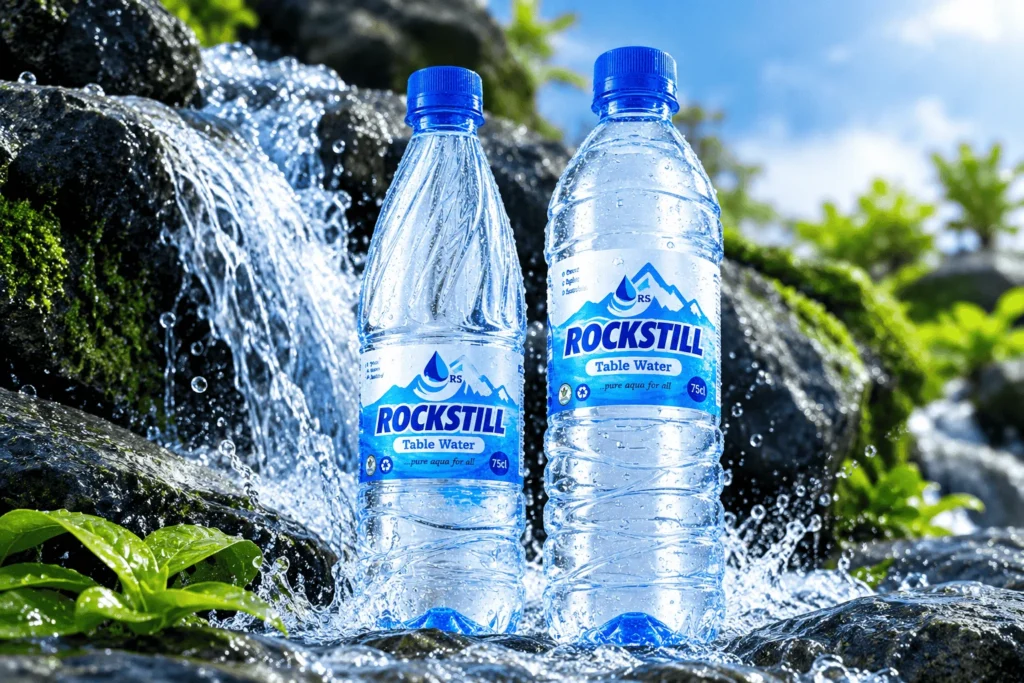
Rockstill Table Water operates in Benin City, Edo State, producing bottled and sachet drinking water. Our aim is to serve households, businesses and communities while encouraging consumers to pay attention to what makes drinking water suitable for consumption.
We also believe that educating people about water safety should not be limited to selling water. Consumers should understand what to check, why testing matters and how to handle drinking water properly.
That is why discussions about water quality, production, packaging and storage matter to us.
We encourage consumers to ask questions, examine product information and make informed choices. These are useful habits regardless of the brand or packaging they choose.
Clean water isn’t a privilege but your right.
Every consumer deserves access to accurate information about the drinking water they choose. We believe that care begins with taking that responsibility seriously.
16. Frequently Asked Questions About Safe Drinking Water in Benin City
What is the safest drinking water to consume in Benin City?
There is no single brand or packaging type that can be declared the safest without reliable, relevant testing evidence. Choose drinking water from a properly regulated source, check the packaging and storage conditions, and consider credible quality-control information.
Is sachet water safe to drink in Benin City?
Sachet water can be safe when it is properly treated, hygienically packaged and handled under appropriate conditions. Check the product’s registration information, packaging, stated dates and storage conditions. These checks are useful, but they cannot replace laboratory testing.
Is bottled water safer than sachet water?
Not automatically. Both can be produced safely, and both can experience contamination or other quality problems. The actual safety of a product depends on its source, treatment, packaging, handling and compliance with relevant requirements.
Can clear water still be contaminated?
Yes. Harmful microorganisms and certain chemicals cannot be detected by sight alone. Clear water may still require laboratory testing to establish its quality.
Does a NAFDAC registration number mean water is always safe?
No. Registration is an important regulatory requirement for applicable products, but it does not guarantee that every individual package will remain safe under all production, transport and storage conditions.
How can I know whether drinking water has been properly tested?
Ask the manufacturer for relevant quality-control information or available laboratory test reports. Check whether the report identifies the sample, testing date, parameters examined and laboratory responsible. A report covering only a few parameters does not establish every aspect of water safety.
What is the importance of pH in drinking water?
pH indicates how acidic or alkaline water is. It is useful for understanding certain water characteristics and treatment conditions. However, pH alone cannot determine whether water is safe to drink.
Is low TDS proof that water is pure?
No. TDS measures the amount of dissolved material in water. A low reading does not prove the absence of bacteria, viruses or all unwanted chemicals.
How should drinking water be stored at home?
Store packaged water in a clean, cool, shaded area, away from chemicals and possible sources of contamination. Keep packages intact and protect opened water from dirty hands and surfaces.
Where can I buy bottled and sachet water in Benin City?
Bottled and sachet water are available through local retailers and suppliers in Benin City. If you need larger quantities, contact a supplier directly to confirm available pack sizes, prices, delivery areas and ordering terms.
How often should drinking water be tested?
The appropriate frequency depends on the water source, treatment system, applicable regulations and potential risks. Commercial producers should follow their approved quality-control programme and applicable regulatory requirements. Private water sources should be tested periodically and whenever there is a reason to suspect contamination.
Conclusion: Don’t Judge Drinking Water by Appearance Alone
Every day, people across Benin City and Nigeria make decisions about the water they drink. Some buy sachets from neighbourhood shops. Others prefer bottled water for their homes, workplaces or journeys.
These choices may differ, but one principle applies to everyone: water safety deserves more than assumptions.
Clear water is not necessarily safe water. A familiar brand is not automatically a guarantee of quality. A registration number is important, but it does not replace proper production, testing and handling.
Consumers can make more informed decisions by checking packaging, understanding product information, paying attention to storage conditions and learning why water quality testing matters.
Manufacturers also have an important responsibility to maintain hygienic production, monitor water quality and address problems promptly.
For families, businesses and communities in Benin City, these simple habits can help make drinking-water decisions more informed.
At Rockstill Table Water, we believe that caring about water means caring about the people who depend on it. And that care begins with understanding what safe drinking water really means.
Choose with care. Ask questions. Pay attention to quality.