
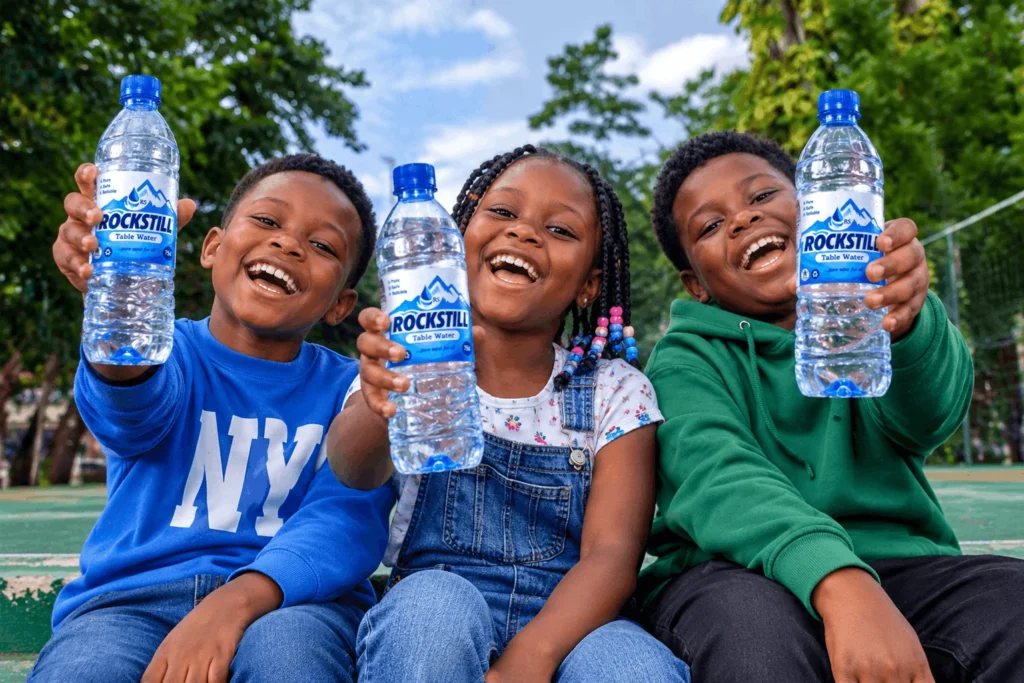
Safe table water in Benin City is important for families, workers, students, business owners and everyone who wants dependable drinking water throughout the day. But when you walk into a shop, buy a bottle from a roadside vendor, or order water for your office, how do you know which water to choose? The answer goes beyond the brand name, price, bottle size or how clear the water looks. Understanding water purification, NAFDAC registration, proper packaging and safe handling can help you make a more informed decision.
In Benin City, Edo State, packaged drinking water is part of everyday life. People buy it for their homes, workplaces, schools, meetings, parties and journeys. Yet many consumers have questions about how table water is made, whether bottled water is safer than tap water, and what makes one water brand a more suitable choice than another.
This guide explains what you need to know in simple terms, so you can make informed choices for yourself, your family or your business.
What Is Table Water?
Table water is drinking water that has been treated and packaged for people to consume. It is commonly sold in sealed sachets and bottles in Nigeria.
You can find table water in supermarkets, provision stores, restaurants, hotels, offices and event centres across Benin City.
However, not all packaged water should be judged by its appearance or popularity. Clear water is not automatically safe water. Some harmful contaminants cannot be seen, smelled or tasted.
That is why proper treatment, quality testing, hygienic packaging and careful handling matter.
1. How Is Bottled Water Purified?
Have you ever wondered what happens before the water you buy reaches your hand?
Water production involves more than filling a bottle. A responsible producer must manage the water source, use suitable treatment methods and maintain hygienic conditions throughout production.
The exact process depends on the original water source and the quality of the water being treated.
Step 1: Water source and initial checks
Water may come from a borehole, a public water supply or another permitted source. Before treatment, the producer should understand the quality of that source.
Testing helps identify problems such as unwanted chemicals, dissolved substances and harmful microorganisms.
Step 2: Filtration
Filtration removes particles and other unwanted materials, depending on the type of filter used.
Different filters perform different jobs. For example, sediment filters help remove suspended particles, while activated carbon can reduce certain unwanted tastes, odours and chemicals.
No single filter removes every possible contaminant.
Step 3: Reverse osmosis, where appropriate
Reverse osmosis (RO) is a water treatment method that uses a special membrane to reduce many dissolved substances in water.
It can be useful when the source water contains unwanted dissolved minerals or other substances that require removal.
However, RO is not the only water purification method, and its suitability depends on the source water and the desired water quality.
Step 4: Disinfection
Disinfection helps control harmful microorganisms. Depending on the system, this may involve ultraviolet (UV) light, ozone or another suitable method.
Each method has specific operating requirements. The equipment must be maintained properly, and the treatment process must be suitable for the water being produced.
Step 5: Hygienic bottling and sealing
After treatment, water must be handled and packaged under hygienic conditions.
Clean packaging, properly maintained filling equipment and secure seals help protect the finished product from contamination.
Step 6: Quality checks
Testing is essential because water that looks clear may still contain harmful contaminants.
A sound quality-control programme considers the source water, treatment system and finished product. It should use suitable tests to check whether the water meets applicable drinking-water requirements.
For consumers, the practical lesson is simple: ask how a producer manages quality rather than relying on claims about advanced machines alone.
2. How to Choose Safe Bottled Water Brands in Nigeria
When choosing a table water brand, it is easy to focus on price, familiarity or the number of people buying it. Those things may influence your decision, but they do not independently prove that water is safe.
Use these checks when buying packaged water in Benin City.
Check the NAFDAC registration details
In Nigeria, packaged water is regulated by the National Agency for Food and Drug Administration and Control (NAFDAC).
Look for the product’s NAFDAC registration number on its packaging. Where necessary, verify the details through official NAFDAC channels rather than assuming that a printed number is genuine or current.
NAFDAC registration is an important starting point, but consumers should also consider product condition, storage and handling.
Inspect the seal and packaging
Before drinking bottled water, check that:
- The cap and safety seal are intact.
- The bottle is not leaking, damaged or unusually deformed.
- The label is legible and contains the expected product information.
- The water does not have an unusual appearance or visible foreign material.
Do not consume water from a bottle that appears to have been opened, tampered with or improperly stored.
Check storage conditions
Water can be contaminated through poor handling after production.
Avoid buying products stored in visibly dirty surroundings or exposed to excessive heat for prolonged periods. Keep packaged water away from chemicals, fuel and other substances that could contaminate it.
Consider the producer’s quality practices
A responsible water producer should take source-water testing, equipment maintenance, hygienic production and finished-product testing seriously.
If you are buying for a school, hotel, hospital, office or large event, ask the supplier about registration, product documentation, delivery arrangements and quality-control practices.
Do not judge safety by taste alone
Good-tasting water is not necessarily free of harmful contaminants. Similarly, a slightly different taste does not automatically mean water is unsafe.
When safety is in question, appropriate testing is more reliable than taste, smell or appearance.
3. What Are the Benefits of Drinking Still Water?
Still water is water without added carbonation. It is the familiar type of drinking water most people consume at home, at work and while travelling.
The main benefits of still water come from staying hydrated, rather than from a special effect associated with the word “still.”
It supports normal body functions
Water helps regulate body temperature, transport substances around the body and remove waste through normal bodily processes.
Adequate hydration also supports the body’s normal physical functions.
It helps replace fluids lost through sweating
Benin City’s warm weather can make fluid replacement particularly important when you work outdoors, exercise, travel or spend long periods in the sun.
Drinking water regularly helps replace fluids lost through sweating.
It is a simple alternative to sugary drinks
Plain water contains no added sugar when it is genuinely unflavoured and has no added ingredients.
Choosing water instead of sugary drinks can help reduce your intake of added sugar.
It is convenient for everyday use
Still water can accompany meals, meetings, school activities, journeys and outdoor events. It is also easy to serve to guests who prefer a drink without carbonation.
Remember, drinking water supports health, but it does not cure diseases or automatically improve immunity beyond the body’s normal functions.
4. How Much Water Should You Drink Daily?
There is no single daily water intake that is perfect for every person.
Your needs depend on factors such as age, activity level, body size, diet, pregnancy or breastfeeding, health conditions and the weather.
In a warm environment such as Benin City, someone doing physical work outdoors may need more fluids than someone spending most of the day in an air-conditioned office.
Practical hydration habits
- Drink water regularly throughout the day instead of waiting until you feel extremely thirsty.
- Drink more when sweating heavily or being physically active, while following appropriate medical advice.
- Include water-rich foods and other suitable drinks in your overall fluid intake.
- Pay attention to thirst and changes in urination, while remembering that these signs are not perfect measures for everyone.
- Follow your healthcare professional’s advice if you have a condition that requires you to limit fluids.
You may have heard the advice to drink eight glasses of water daily. This can be a simple reminder for some people, but it is not a universal medical requirement.
For more detailed guidance, see the World Health Organization’s information on drinking-water.
5. Still Water vs Sparkling Water: Which Should You Choose?
Still water and sparkling water can both contribute to hydration. The main difference is carbonation.
Still water has no added carbonation, while sparkling water contains dissolved carbon dioxide that creates bubbles.
| Feature | Still water | Sparkling water |
|---|---|---|
| Carbonation | No added carbonation | Contains carbonation |
| Taste | Usually neutral | May taste slightly sharp or tangy |
| Hydration | Contributes to fluid intake | Also contributes to fluid intake |
| Possible discomfort | Usually less associated with gas from carbonation | May cause bloating or belching in some people |
| Common uses | Everyday drinking, meals and meetings | Meals, refreshments and people who enjoy bubbles |
Is still water healthier than sparkling water?
Not necessarily. Plain still water and plain sparkling water can both be suitable drinking choices.
The ingredients matter. Some sparkling waters contain added sugar, sodium, flavourings or other ingredients, so check the label if these are relevant to your needs.
For everyday hydration, choose safe water that you enjoy and can access consistently.
6. Is Bottled Water Safer Than Tap Water?
This is a common question, but the honest answer is that it depends on the quality of both water sources and how the water is handled.
Properly treated and tested bottled water can be a suitable drinking-water option. Tap water that meets applicable drinking-water standards can also be safe.
The word “bottled” does not automatically mean safer, just as the word “tap” does not automatically mean unsafe.
What should you consider?
Water quality: Has the water been tested for relevant microbiological and chemical contaminants?
Treatment: Is the treatment suitable for the source water?
Distribution: Has the water been protected from contamination during storage and transport?
Handling: Is the container clean, sealed and properly stored?
In Nigeria, if you cannot establish that a particular water supply is safe, use a reliable treated source or follow public-health guidance for making the water safe.
Boiling can kill many disease-causing microorganisms, but it does not remove every chemical contaminant. Filtering water also only works for the contaminants that the particular filter is designed to remove.
For that reason, an unknown water source may require testing and a treatment method appropriate to the identified risks.
7. What Are the Bottled Water Safety Regulations in Nigeria?
When buying table water in Benin City, consumers should understand the role of NAFDAC.
NAFDAC regulates packaged water in Nigeria, including its registration and applicable manufacturing and quality requirements.
Its guidance for packaged water addresses requirements for production facilities and hygienic manufacturing practices.
You can consult the agency’s official resources here:
What about FDA bottled water standards in the USA?
The United States has its own regulatory framework. The US Food and Drug Administration (FDA) regulates bottled drinking water, while the Environmental Protection Agency (EPA) regulates public drinking-water systems.
The FDA’s bottled-water requirements address product quality, contaminants and hygienic manufacturing.
See the FDA’s explanation of bottled water safety.
These American rules are useful when researching the US market, but they should not be confused with Nigeria’s regulatory requirements. For locally produced table water in Benin City, NAFDAC is the relevant starting point.
8. Where Can You Buy Table Water in Benin City?
Table water is sold through many channels across Benin City, including neighbourhood provision stores, supermarkets, restaurants, wholesalers and direct suppliers.
The most suitable option depends on how much water you need, how frequently you need it and whether you are buying for personal use or business.
For homes and individuals
If you are buying water for your household, consider package size, availability, storage space and the product’s registration and packaging condition.
Buying from a dependable retailer can make it easier to maintain a consistent supply.
For offices and businesses
Offices need water for employees, meetings, visitors and daily operations.
When choosing a water supplier, consider:
- Consistent product availability.
- Reliable delivery schedules.
- Suitable quantities for your workforce.
- Clear pricing and payment arrangements.
- Proper storage and handling during delivery.
For a business, a dependable supply arrangement can be more useful than repeatedly searching for water whenever stock runs low.
For parties, weddings and other events
If you are organising a wedding, birthday party, conference, burial ceremony or community gathering, plan your water supply before the event.
Estimate the number of guests, the expected duration and whether food will be served. Consider the weather and the availability of other drinks.
Ask suppliers about bulk pricing, delivery time, minimum order quantities and how they will handle any changes to the order.
There is no universal quantity that suits every event. A daytime outdoor gathering in hot weather may need a different supply from a short indoor meeting.
For retailers and distributors
If you want to resell table water in Benin City, look beyond the price per pack.
Consider the supplier’s registration and product documentation, consistency of supply, delivery costs, available margins, payment terms and the condition in which products arrive.
A cheap wholesale price may not produce a good business result if deliveries are unreliable, products are damaged or customers cannot find the brand when they need it.
Start with realistic demand estimates and confirm commercial terms directly with the supplier before committing to a large order.
9. How to Find Affordable Bulk Water for Offices and Events
Buying in bulk can simplify planning, but affordability is about more than the lowest quoted price.
Before choosing a supplier, compare the total cost of getting the water to where it will be used.
For example, one supplier may offer a lower price per pack but charge more for transport. Another may have a higher product price but offer a delivery arrangement that reduces the total cost.
Use this simple checklist
- Estimate your quantity. Work out the number of people, expected duration and likely demand.
- Request a written quotation. Ask for the unit price, quantity, delivery fee and any minimum order.
- Confirm delivery details. Agree on the date, arrival time, location and contact person.
- Check the product. Confirm the packaging, registration details and condition of the goods when delivered.
- Plan storage. Keep water in a clean, suitable place away from chemicals and excessive heat.
- Agree on payment terms. Make sure both parties understand the payment schedule and order conditions.
This approach helps households, event organisers and businesses avoid unnecessary last-minute purchases.
10. How to Choose a Table Water Supplier in Benin City
Whether you are buying a few packs or arranging regular deliveries, use these questions to assess a potential supplier.
Is the product properly registered? Check the product’s NAFDAC registration details and confirm them where necessary.
Can the supplier maintain a consistent supply? Ask about normal order quantities, lead times and what happens when demand increases.
Are the delivery arrangements clear? Confirm the delivery area, fees, schedule and responsibility for damaged goods.
Can the supplier explain its quality practices? Look for credible information about production hygiene, testing and quality control rather than relying on unsupported claims.
Does the price make sense for your needs? Compare the total cost, product size and delivery terms, not just the headline price.
These questions are useful whether you are buying for a family, a shop, a hotel, a school or a large event.
11. Why Local Availability Matters When Choosing Drinking Water
Imagine you manage an office with twenty employees. Every week, you need enough drinking water for staff and visitors.
A supplier may offer an attractive price, but if the water arrives late or is frequently unavailable, you still have a problem to solve.
Now imagine you are organising a family celebration. Guests are arriving, food is being served and the water you expected has not arrived.
In both situations, the real need is not simply a product. It is a dependable supply of drinking water that meets appropriate quality requirements.
That is why local availability, hygienic handling, consistent quality and clear delivery arrangements should be part of the buying decision.
For consumers and businesses in Benin City, working with a suitable local supplier can make it easier to plan regular purchases and communicate delivery needs.
12. Frequently Asked Questions About Table Water
Which table water brand is best in Benin City?
There is no single brand that can be declared the best for every consumer without reliable comparative evidence. Look at registration, packaging condition, credible quality information, availability, price and the supplier’s reliability.
How can I know whether bottled water is safe to drink?
Check the registration details, seal, packaging condition and storage environment. Remember that appearance and taste cannot establish whether water is free of harmful contaminants.
What is the difference between bottled water and table water?
In everyday Nigerian usage, table water commonly refers to packaged drinking water sold in sachets or bottles. The exact product classification and applicable requirements depend on the product and relevant regulations.
Is reverse osmosis necessary for every water producer?
No. Reverse osmosis is one treatment option. The correct treatment process depends on the source water, the contaminants present and the required quality of the finished product.
Can I order table water in bulk for an office or event?
Yes. Contact suppliers directly to confirm available quantities, prices, minimum orders, delivery locations and schedules.
What should I check before buying wholesale table water?
Check the product’s registration details, supplier reliability, unit price, transport costs, payment terms, delivery schedule and product condition.
How much water should a person drink each day?
Water needs vary with activity, climate, age, diet and health. Drink regularly and adjust to your circumstances. People who have been advised to restrict fluids should follow their healthcare professional’s guidance.
Conclusion: Make Water Quality Part of Your Buying Decision
Choosing safe table water in Benin City starts with asking the right questions.
How is the water treated? Is the product registered? Is the packaging intact? Has the water been stored properly? Can the supplier meet your needs consistently?
These questions matter whether you are buying for your home, stocking a shop, supplying an office or planning an event.
Price, familiarity and convenience all have a place in the decision. But they should not replace attention to quality and safe handling.
When you understand what to look for, you can make more informed choices for yourself, your family, your customers and the people who depend on you.
Looking for table water in Benin City? Contact Rockstill Table Water to enquire about product availability and supply arrangements for your needs. Ask about the available pack sizes, order quantities and delivery options before placing an order.